One room 10–15 degrees hotter
Solar gain concentrates in whichever room faces the afternoon sun. The thermostat is in the hallway, so the HVAC never solves it — it just runs longer and cools the rooms you are not in.
Residential energy
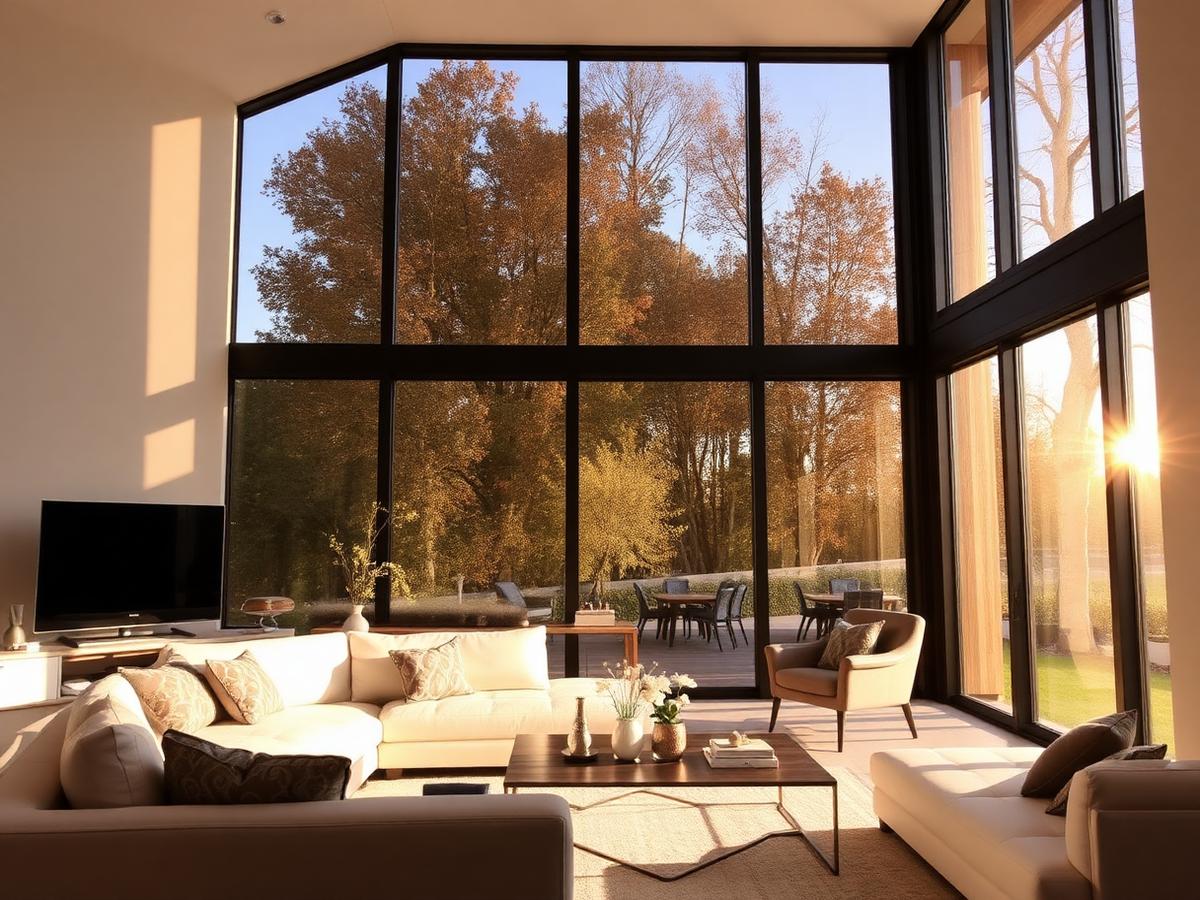
That west-facing great room that is unusable from 3pm to sunset is not a design flaw — it is untreated glass. Spectrally selective film rejects the infrared heat and keeps the view.
The problem
Modern Central Oregon homes are designed around the view — walls of south and west glass at 3,600 feet with very little shade. The result is a predictable set of complaints.
Solar gain concentrates in whichever room faces the afternoon sun. The thermostat is in the hallway, so the HVAC never solves it — it just runs longer and cools the rooms you are not in.
Heat rejected at the glass never has to be removed by the AC. Film reduces the load on the system, shortens run cycles and evens out the temperature between rooms.
UV plus visible light bleaches hardwood, rugs, art and leather. Film blocks 99% of UV and a meaningful share of the visible light that causes the rest of the fading.
Low winter sun off the snow is blinding. Glare-control film makes the room usable without closing blinds on the view you paid for.
The fix
The film we install is engineered to reject infrared while passing visible light. From inside, the view looks like the view. From outside, the glass looks like glass.
Nano-ceramic layers target the infrared band that carries the heat you feel, so you get major heat reduction from a film that still reads as nearly clear.
Old residential film had one look: silver. Today you can choose neutral low-reflectivity film that neighbors will not notice, or a dual-reflective film if you also want daytime privacy.
Most modern homes here have dual-pane Low-E glass. We match film specs to the glass type so there is no thermal-stress risk, and we tell you honestly when a window should be left alone.
Low-emissivity film options reflect radiant heat back into the room in winter, which helps the north side of the house that never warms up.
Process
A walkthrough first: we measure the glass, note orientation and glass type, and recommend a film per elevation instead of blanketing the whole house in one product. Most homes are a one-day install with no mess and no disruption — furniture moved back, glass cleaned, and a written film warranty when we leave.
FAQ
Yes, when the home has significant west or south glass. Rejecting solar heat at the window means the air conditioner never has to remove it. The effect is largest in rooms that currently run hotter than the rest of the house.
It does not have to. Spectrally selective films reject infrared heat while passing most visible light, so you can get serious heat reduction from a film that looks nearly clear. Darker options exist if you also want glare or privacy control.
In most cases yes, with the correct film. Glass type, size, orientation and shading all affect thermal stress, so we check the glass before recommending a product, and we will tell you if a specific window should be left untreated.
Some manufacturers restrict certain film types on certain glass. We ask about your window brand during the walkthrough and select a film that keeps you inside those terms; reputable film manufacturers also back their own product with a warranty.
Quality residential film typically lasts fifteen years or more indoors, backed by a manufacturer warranty against bubbling, peeling, cracking and discoloration.
Yes. Residential installs cover Bend, Redmond, Sisters, Black Butte Ranch, Sunriver, La Pine, Prineville and Madras.
Service area
Based at 192 W Barclay Dr, Sisters, OR 97759, installing across Central Oregon — shop appointments in Sisters and mobile installs everywhere else.