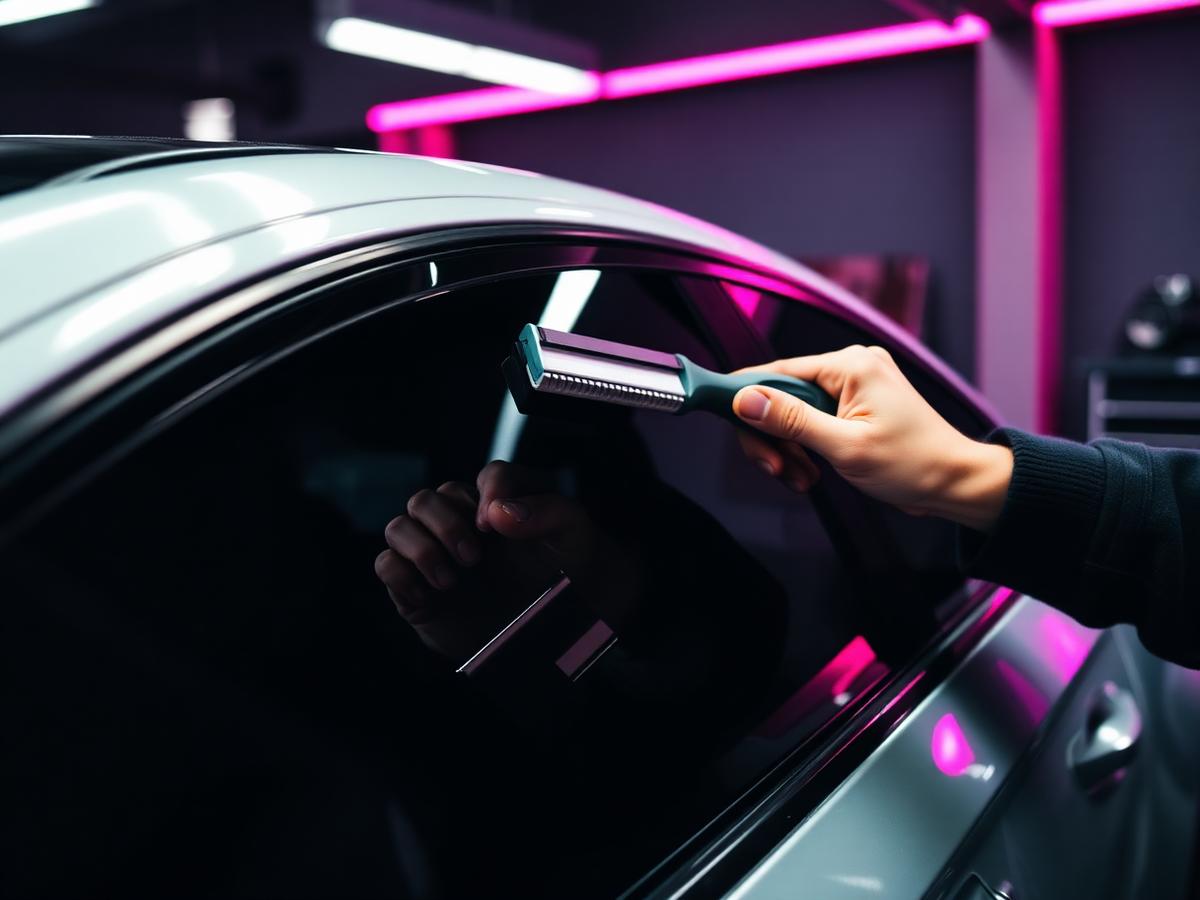
Ceramic window tint installed on a vehicle in Central Oregon

Film school

IS CERAMIC WINDOW TINT WORTH IT?

Short answer: at 3,600 feet with 300 days of sun a year, yes. Longer answer below — including an honest comparison of every film type and what each one actually does to the heat coming through your glass.

The short version

Darkness is not heat rejection

This is the single most misunderstood thing about window film. A very dark dyed tint can leave your cabin hotter than a lighter ceramic film, because heat you feel is mostly infrared radiation — and blocking infrared has almost nothing to do with how dark the glass looks.

It rejects heat, not just light

Darkness and heat rejection are two different things. Ceramic film uses non-conductive nano-ceramic particles to block infrared radiation, so a lighter-looking ceramic film can keep a cabin cooler than a much darker dyed film.

No purple fade, no bubbling

Dyed film breaks down under UV — that is the purple, blotchy tint you see on older cars around town. Ceramic film has no dye layer to degrade, and Rayno backs it with a lifetime warranty.

No signal interference

Old metalized film could interfere with GPS, cell reception, keyless entry, tire-pressure sensors and toll transponders. Ceramic film is non-metallic and non-conductive, so nothing gets blocked.

99% UV rejection protects the interior

At 3,600–4,200 feet the UV load in Central Oregon is significantly higher than at sea level. Ceramic film blocks 99% of UV, which is what saves dashboards from cracking and leather and upholstery from bleaching.

Better night visibility

Because ceramic film gets its performance from IR rejection rather than sheer darkness, you can run a legal, lighter shade and still get serious heat control — much safer on unlit highway stretches.

It works on homes and storefronts too

The same spectrally selective technology goes on residential and commercial glass, cutting hot spots and cooling load without turning the Cascade view into a mirror.

Head to head

Ceramic vs. dyed, metalized and carbon

Every film type has a use case. Here is where each one lands on the things that matter.

Comparison of dyed, metalized, carbon and ceramic window film
Film typeHeat rejectionLifespanSignal / clarityBest for
DyedLow — mostly cosmetic2–5 yrs, fades purpleNo interferenceLowest up-front cost
MetalizedModerate5–10 yrsCan disrupt GPS, cell, keylessOlder vehicles, budget builds
CarbonGood10+ yrs, no fadeNo interferenceDaily drivers, matte look
Nano-carbon ceramicExcellent — high IR rejectionLifetime warrantyNo interference, high clarityHigh-sun climates like Central Oregon

Why Rayno

What we install and why

Nfamous Customs is a certified Rayno dealer. Rayno's nano-carbon ceramic line is a multi-layer, non-metallic film with high infrared rejection, high optical clarity and a lifetime warranty against bubbling, peeling, cracking and color change — which is exactly the spec sheet you want for High Desert sun and cold winters. Same technology goes on vehicles, homes and storefronts.

Nano-carbon ceramic99% UV rejectionHigh IR rejectionNo signal interferenceLifetime film warrantyCertified Rayno dealer

FAQ

Ceramic tint — FAQ

Is ceramic window tint worth it?

In a high-sun, high-elevation climate like Central Oregon, yes. Ceramic film rejects far more infrared heat than dyed or carbon film, blocks 99% of UV, will not fade purple, and carries a lifetime warranty — so the higher up-front cost is spread across the life of the vehicle instead of a re-tint every few years.

What is the difference between ceramic tint and regular tint?

Regular dyed tint darkens the glass using a dye layer that breaks down under UV. Ceramic tint suspends non-conductive nano-ceramic particles in the film, which reflect and absorb infrared heat. The practical difference is that ceramic keeps the cabin cooler at the same shade level and does not degrade.

Does ceramic tint look different from normal tint?

It looks cleaner. Ceramic film has higher optical clarity and a neutral charcoal tone rather than the slightly blue or purple cast that dyed film develops. From the outside it reads as a factory-quality install.

Will ceramic tint block my phone signal or GPS?

No. That was a problem with older metalized films. Ceramic film is non-metallic and non-conductive, so cell signal, GPS, keyless entry, tire-pressure sensors and toll transponders all work normally.

How dark can I legally go in Oregon?

Oregon allows 35% VLT or lighter on front side windows, any darkness on back side and rear windows, and a tint strip on the top 6 inches of the windshield. Because ceramic film performs on heat rejection rather than darkness, a legal 35% ceramic film still delivers major heat control.

How long does ceramic tint last?

Rayno ceramic film is warrantied for the life of the vehicle against bubbling, peeling, cracking and color change. Realistically it outlasts most people's ownership of the car.
Service area

Ceramic tint across Central Oregon

Based at 192 W Barclay Dr, Sisters, OR 97759, installing across Central Oregon — shop appointments in Sisters and mobile installs everywhere else.